
TAGPEC
Teaching and Guidance Policy Essentials Checklist
The TAGPEC is a powerful tool for building and supporting effective and cohesive early childhood systems.
The leaders of early childhood education (ECE) programs are responsible for developing and articulating policies and procedures to guide their work, including guidance policies regarding children’s challenging behaviors. While designed to create safe environments conducive to early learning, many of these policies are characterized by a punitive approach that fails to address the complexities of young children’s behaviors and/or their developmental needs. This often leads to detrimental effects on a child’s educational trajectory and emotional well-being, and children’s challenging behaviors are often listed as the number one concern of early childhood teachers.
The TAGPEC reflects the authors’ philosophical orientation towards the centrality of teaching and guidance in ECE. We developed the TAGPEC to help early childhood programs serving children ages 0-8 develop high-quality behavior-guidance policies that support teaching and learning and prevent and address challenging behaviors.
Our work is guided by the 5 assumptions of our Humanistic Approach to Teaching and Behavior Guidance:
- The role of the adults is to teach children appropriate social emotional skills
- Relationships guide and regulate behaviors
- Behavior is communication
- Each child is a unique individual
- Implicit bias affects decision-making
The TAGPEC
- Is an easy-to-use checklist that supports ECE programs to develop and/or evaluate existing behavior guidance policies
- Was developed via an extensive review of the literature in the fields of general education, special education, early childhood education, early care and education, early childhood special education, educational administration, and school psychology.
- Ensures policies are clear, evidence based, and support the social emotional development of all children
- Is aligned with existing ECE systems and tools, including PBIS, the Teaching Pyramid, QRIS, practice based coaching, the Head Start Performance Standards, and the Classroom Assessment Scoring System.
- Supports practices that ensure relationships with families are meaningful, authentic, and strengths based
- Ensures professional development is in line with program goals and best-practice recommendations
- Has been integrated into statewide QRIS systems and early childhood mental health consultation systems
Latest Updates
Current Projects
We have continued to examine the psychometric properties of the TAGPEC, and have spent the last year refining the tool based on our analysis.
Publications
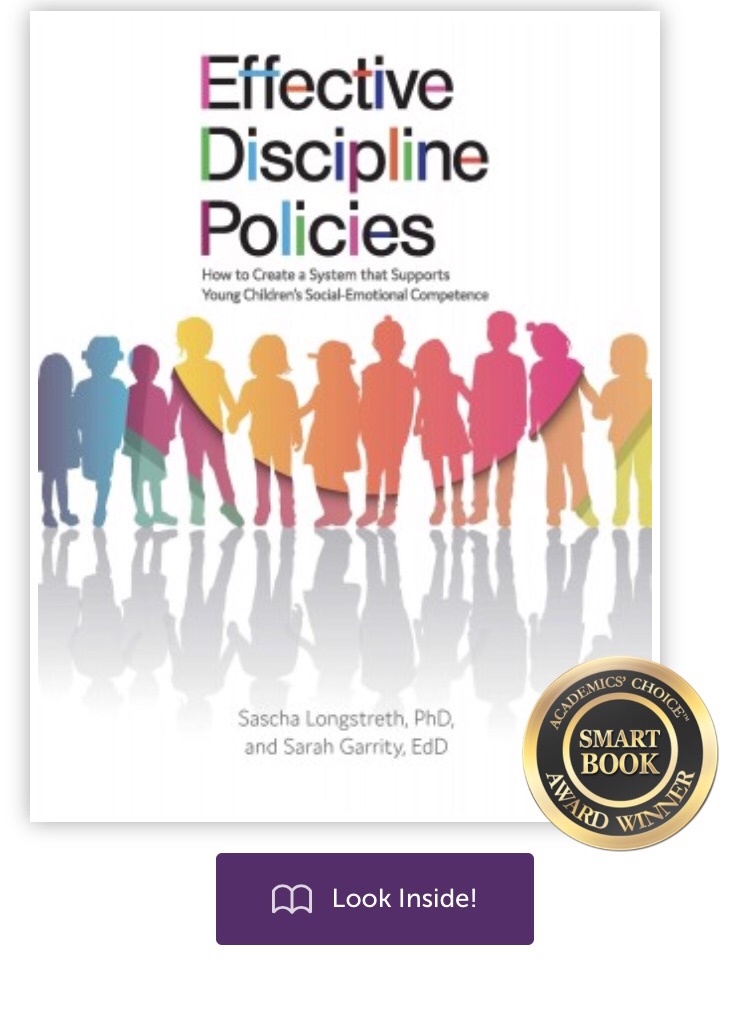
Effective Discipline Policies: How to Create a System that Supports Young Children's Social-Emotional Competence
Effective Discipline Policies provides clear, evidence-based information to early childhood program administrators about how to develop and implement high-quality behavior guidance policies that support teaching and learning and prevent and address challenging behaviors. Go to Publications to learn more.
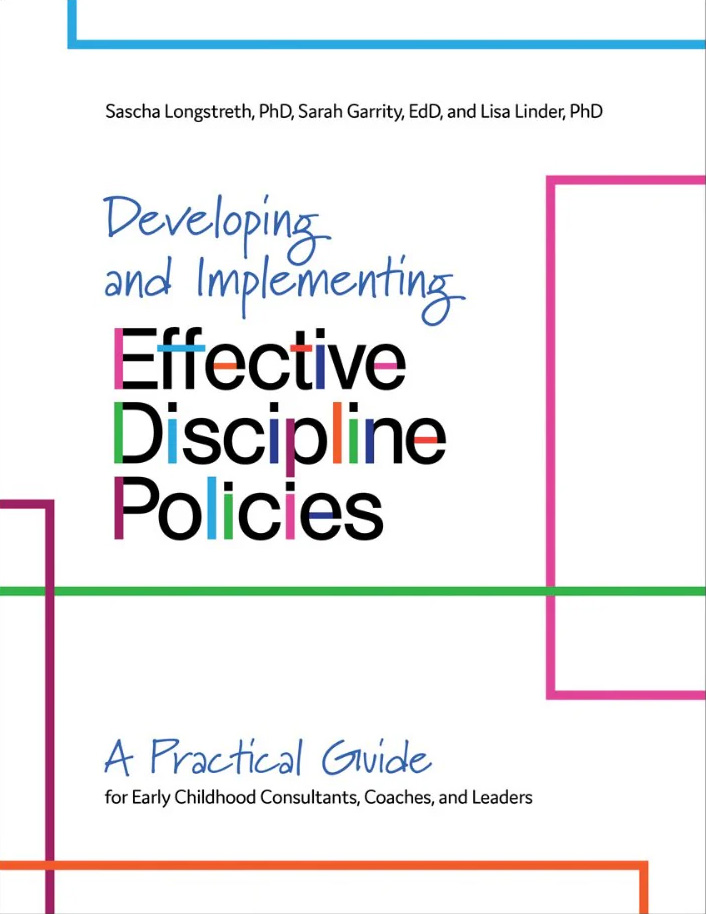
Developing and Implementing Effective Discipline Policies: A Practical Guide for Early Childhood Consultants, Coaches, and Leaders
Learn how to rethink discipline policies, strengthen team spirit, and implement policy changes with Developing and Implementing Effective Discipline Policies, the workbook companion to the award-winning book Effective Discipline Policies.
Conferences
NTI2026: National Training Institute on Effective Practices Conference
Check out our workshop, Effective Discipline Policies: Tools for Implementation and State Compliance, at the Annual National Conference.